Best 12V Battery for Camper: Top Deep-Cycle Options for RVs and Off-Grid Setups 2026
Yes—these 12V batteries are designed for campers, RVs, and off-grid setups, focusing on deep-cycle performance for auxiliary power and house loads. The top picks here are suited for different needs: lithium iron phosphate (LiFePO4) packs emphasize long life and lighter weight, while AGM lead-acid options offer maintenance-free convenience. This guide highlights five options most relevant to campers: when to choose LiFePO4 for longevity, when to stick with AGM for cost, and how to size batteries for your daily power needs. The table below compares key at-a-glance details for quick reference.
| Product | Chemistry | Best For | Approx. Capacity | Notable Limitation |
|---|---|---|---|---|
| 12V 100Ah LiFePO4 Group 24 (SUPER EMPOWER) | LiFePO4 | RV and marine setups needing long life | 1280Wh | Not for engine starting |
| 12V 100Ah LiFePO4 Group 31 (SUPER EMPOWER) | LiFePO4 | Deep cycle RV and solar users needing high cycles | 1280Wh | Not for engine starting |
| Weize Deep Cycle AGM 12V 100Ah | AGM Lead-Acid | Budget-friendly, maintenance-free option | ~1200Wh | Heavier, shorter lifespan vs LiFePO4 |
| ECO-WORTHY 280Ah LiFePO4 (Metal Case) | LiFePO4 | High-capacity home backup and off-grid campers | 3584Wh | Bluetooth app may require setup |
| ECO-WORTHY 3584Wh 280Ah LiFePO4 (Bluetooth) | LiFePO4 | Large RV/off-grid systems with real-time monitoring | 3584Wh | Higher upfront cost |
12V 100Ah LiFePO4 Group 24 Deep Cycle Battery — SUPER EMPOWER

Product overview emphasizes deep-cycle energy storage for RVs, boats, trolling motors, and off-grid systems. It uses premium LiFePO4 cells with an integrated BMS protecting against overcharge, over-discharge, overcurrent, short circuits, and temperature extremes. This is a true energy storage device, not for engine starting. Best for: RV or marine house power where weight and longevity matter. Limitation: not suitable for engine cranking.
12V 100Ah LiFePO4 Group 31 Deep Cycle Battery — SUPER EMPOWER
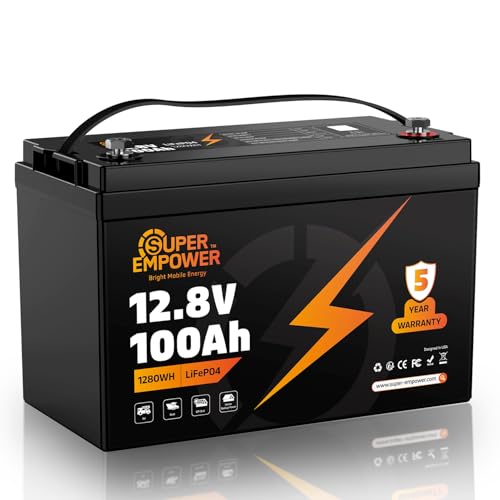
Overview notes long-cycle life with Grade A+ LiFePO4 cells and an integrated BMS for protection against charge/discharge events and extreme temperatures. It supports roughly 5000 cycles at 100% DOD, higher at reduced DOD. Best for: campers needing a durable, long-lasting battery that can handle frequent cycling. Limitation: requires lithium-compatible chargers and system design.
Weize Deep Cycle AGM 12V 100Ah Battery

Maintenance-free AGM option with a low self-discharge rate and broad operating temperature range. Best for: budget-conscious campers who want a straightforward, maintenance-free solution. Limitation: heavier than LiFePO4 and fewer charge cycles.
ECO-WORTHY 280Ah LiFePO4 Battery with Bluetooth

Real-time monitoring via Bluetooth app, built-in 200A BMS, and a rugged metal frame for better protection. Best for: campers seeking high capacity with monitoring and robust protection. Limitation: Bluetooth range limited to about 15 meters; plan installation accordingly.
ECO-WORTHY 3584Wh 12V 280Ah LiFePO4 Battery (Bluetooth)

High-capacity LiFePO4 option designed for large RV systems and off-grid setups. It features a built-in 200A BMS and Bluetooth monitoring. Best for: sizable campers or tiny homes on wheels that demand substantial energy reserves. Limitation: higher upfront cost and larger footprint.
Buying Guide
What matters most for camper batteries?
Power needs: Estimate daily amp-hours for lights, fans, pumps, refrigeration, and electronics. Choose a capacity that covers a couple of days between charges if you’re off-grid.
LiFePO4 vs. AGM: which to pick?
LiFePO4 offers longer life, lighter weight, and deeper discharge ability. AGM is typically lower upfront cost and maintenance-free but heavier and with fewer cycles. For frequent cycling and long trips, LiFePO4 often saves money over time.
How to size a battery system?
- Calculate total daily energy use in watt-hours (Wh).
- Divide by system voltage (12V) to get amp-hours (Ah).
- Factor in days of autonomy and inverter efficiency.
Charging considerations
Use chargers compatible with LiFePO4 or AGM chemistries. For LiFePO4, set charging to appropriate CC/CV voltages (commonly around 14.4–14.6V). Solar and MPPT controllers should be programmed for lithium mode when applicable.
Temperature and safety
Low-temperature protection is crucial. Some batteries disable charging below certain temperatures to protect cells. Ensure adequate ventilation and avoid exposure to extreme heat or moisture in camping setups.
Frequently Asked Questions
- What is the difference between 12V LiFePO4 and AGM for campers? LiFePO4 generally lasts longer and weighs less, with deeper discharge capability; AGM is budget-friendly and maintenance-free but heavier and with fewer cycles.
- Can I use a vehicle charger to charge a LiFePO4 battery? Yes, but use a charger compatible with lithium chemistries to avoid damaging the battery or BMS.
- Do LiFePO4 batteries work in cold weather? They have low-temperature protection; charging may stop below certain temperatures, but discharging can continue depending on the model.
- How many amp-hours should I need for a weekend camper trip? This depends on your loads; a typical modest setup might require 100–200Ah for basic use, while larger off-grid systems can require 280Ah or more.
- Are there safety concerns with metal-cased LiFePO4 batteries? Metal cases provide durability and fire resistance, but ensure proper mounting and ventilation per product guidelines.