Best Car Code Readers for 2026: Easy OBD2 Scanning and Diagnostics 2026
Answering the needs of DIYers and professional technicians alike, these car code readers help you identify and clear engine trouble codes quickly. They’re best for drivers who want an affordable, portable diagnostic tool for routine maintenance, quick fault checks, and I/M readiness verification. The top picks cover a range from basic code reading to more advanced live data and DLC support, with suitability for everyday commuters, weekend mechanics, and light-duty shop use. Below is a quick summary of five strong options, followed by in-depth product sections and a practical buying guide.
| Product | Best For | Key Benefit |
|---|---|---|
| ANCEL AD310 | Budget-conscious DIYers | Fast code read/clear; compact design |
| MOTOPOWER MP69033 | All-round basic to intermediate diagnostics | Wide protocol support; clear LCD |
| FOXWELL NT301 | Entry-level technicians | Live data, VIN, and CEL control |
| VDIAGTOOL VD10 | New car owners and hobbyists | Large DTC database; TFT screen |
| ANCEL AD410 | All-around OBDII users | Extensive DTC library; EVAP and O2 tests |
ANCEL AD310 Classic Enhanced OBD II Scanner

- Features: CEL Doctor, reads and clears emission-related codes, reads live data, I/M readiness, freeze frame, and vehicle information. No external power source needed.
The AD310 is best for drivers who want a compact, affordable tool that quickly identifies why the check engine light is on. It’s well suited for homeowners and hobbyists who need a straightforward diagnostic that doesn’t require batteries or chargers. A potential limitation is that some advanced vehicle systems may not be supported beyond basic OBDII functions.
MOTOPOWER MP69033 Car OBD2 Scanner

- Features: Built-in DTC library, reads/erases codes, I/M readiness, live data, and vehicle information. Supports 9 protocols and multiple languages; powered via OBDII port.
Best for buyers who want broad protocol coverage and a readable LCD display. It’s a solid all-around choice for a wide range of models since 1996. Choose this if you want robust language options and data views; this device’s simplicity helps avoid overkill for casual users. It may be less ideal for users needing ABS/SRS diagnostics or advanced resets beyond basic codes.
FOXWELL NT301 OBD2 Scanner

- Features: Reads DTCs, checks emissions readiness, turns off CEL, reads live data, and retrieves VIN. Note: basic OBD2 functions; does not support ABS/SRS or other advanced systems.
Best for aspiring technicians who want a focused tool that provides live data and VIN retrieval without complicated software. This unit is better for those who primarily need engine diagnostics and simplicity. If you require ABS or airbag data, consider a model with broader system support, as NT301 does not cover those systems.
VDIAGTOOL VD10 OBD2 Scanner
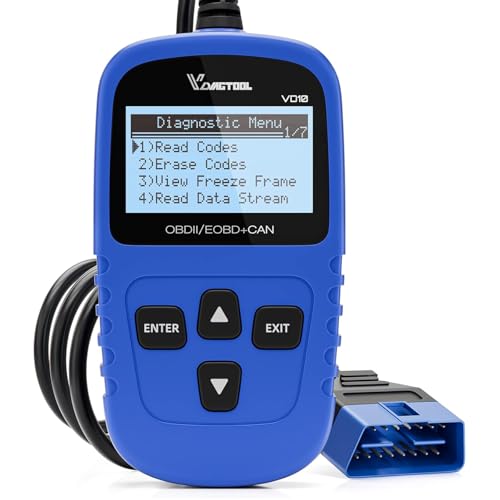
- Features: Reads/clears codes, live data, freeze frame, I/M readiness, vehicle information; built for DIYers with a TFT screen and easy operation.
Best for DIY enthusiasts and new car owners who want a straightforward, screen-based interface with built-in DTC definitions. It’s a practical choice for quick checks and routine maintenance. Limitation: primarily engine-focused; advanced ABS/SRS diagnostics are not highlighted in its feature set.
ANCEL AD410 Enhanced OBD2 Scanner

- Features: Wide compatibility across OBDII protocols, multilingual support, reads and clears codes, 42,000+ DTC library, MIL reset, I/M readiness, EVAP and O2 sensor tests. No battery or charger needed; powered from the vehicle.
Best for users who want extensive code lookup and more advanced diagnostics without subscribing or extra software. This model is preferable when you need rapid access to a large database of definitions and EVAP testing. Note: It’s focused on engine and emissions systems; it does not support ABS/SRS or transmission-level resets beyond standard CEL clearing.
BlueDriver Pro Next Gen OBD2 Scanner
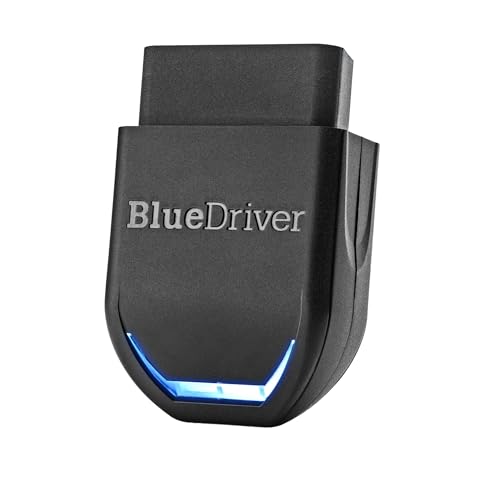
- Features: Turns a smartphone into a diagnostic tool, reads and clears codes for many systems (including ABS, SRS, TPMS, transmission), provides technician-verified repair reports and live data. No monthly subscription required.
Best for tech-savvy users who want deep diagnostics via a smartphone app, with expanded coverage across many vehicle systems. Choose this if you need comprehensive vehicle health insights and repair guidance. It is more premium and relies on app data; not ideal for users who prefer a standalone handheld device without a phone dependency.
Buying Guide
What should you consider when choosing a car code reader?
- Scope of diagnostics: Do you need just engine codes or broader access (ABS, SRS, transmission, EVAP, TPMS)?
- Interface: Do you prefer a handheld screen or a smartphone-connected device? LCD readability matters in bright conditions.
- Protocol support: Ensure compatibility with your vehicle’s year and region (US/EU/Asia) and listed protocols like CAN, OBDII, ISO9141, and KWP2000.
- Data depth: Live data, freeze frame, I/M readiness, and VIN retrieval add value for pinpointing issues and smog readiness.
- Library size: A larger DTC library helps with faster definitions and fewer online lookups.
- Future-proofing: Consider whether you want a device with software updates, new code definitions, or app-based support for newer models.
FAQ
- Q: Do these tools work on all vehicles? A: Most are designed for OBDII-compliant cars from 1996 onward, with varying levels of support for ABS/SRS or other systems.
- Q: Can I reset a check engine light with these tools? A: Many models can clear codes once the underlying issue is fixed; some have a dedicated MIL reset function, while others require repair before the code can be cleared.
- Q: Is a smartphone necessary for use? A: Some options, like BlueDriver, rely on a smartphone app; others are standalone handheld units.
- Q: Do these tools require batteries? A: Most plug directly into the OBDII port and draw power from the vehicle; no separate battery is needed.
- Q: Will these tools fix problems or only diagnose? A: They diagnose and provide code definitions; repairs must be performed by the user or a technician.
- Q: Can I use these tools for professional diagnostics? A: Yes, models with live data, VIN, and repair reports are suitable for light professional use, while higher-end tools offer broader system coverage.