Best Heat Shield Tape for Cars: Top High-Temp Solutions for Automotive Protection 2026
Answering the top buyer question: which heat shield tape works best for automotive needs depends on the job. This guide highlights five durable options designed to reflect, insulate, and block radiant heat in engine bays, exhausts, hoses, and more. Each pick targets different use cases—from high-temp engine compartments to hose protection—so you can choose the right tape for your vehicle and project. See the quick product summary table below for a fast comparison.
| Product | Best For | Key Benefit |
|---|---|---|
| Design Engineering Cool-Tape | Extreme heat areas | Up to 2000°F radiant heat resistance |
| FIREWESS Aluminum Foil Tape | General automotive wraps | Waterproof, corrosion- and flame-resistant |
| FLASLD Aluminized Heat Shield | Heat barrier projects | Reflects up to 95% of heat |
| BOMEI PACK Aluminum Foil Tape | Flexible, everyday uses | Strong adhesion, wide surface compatibility |
| Design Engineering Reflect-A-Gold | Firewalls and bulkheads | High-temperature up to 850°F |
Design Engineering Cool-Tape | 400°F+ Self-Adhesive Heat Shield

This self-adhesive tape is designed for high-heat protection in automotive and industrial environments. Best for engine bays, exhaust regions, and firewall areas where radiant heat can impact components. The product combines a lightweight aluminized layer with a woven glass fiber backing for durable thermal resistance and flexibility. The adhesive backing allows quick installation without extra tools. Caution: surface cleanliness is important for adhesion longevity on oily or uneven surfaces.
FIREWESS Aluminum Foil Heat Shield Tape

This fiberglass-based tape pairs an aluminum foil outer layer with a robust adhesive to provide waterproof, heat- and flame-resistant sealing. It’s well-suited for wrapping hoses or securing patches in exhaust zones, and its length (2 in x 66 ft) supports long runs without excessive seams. Best for: ongoing, general-purpose heat shielding on automotive parts. Caution: aluminum foil tape may not adhere as well on very dusty or oily surfaces until properly cleaned.
FLASLD Aluminized Heat Shield Thermal Barrier
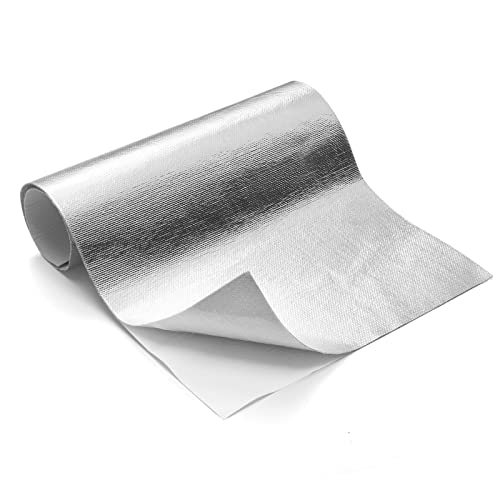
Designed to withstand temperatures over 2000°F, this aluminized adhesive-backed barrier excels at reflecting radiant heat and protecting sensitive components. It’s offered in multiple sizes (12″ x 12″ to 24″ x 40″) and trims easily to fit complex shapes. Best for: targeted protection on engine covers, bulkheads, or firewall areas where heat remains intense. Limitation: thickness is moderate, so it may require multiple layers for very high heat flux zones.
BOMEI PACK Adhesive Aluminum Foil Heat Shield Tape

This roll combines fiberglass fabric with an aluminum-coated outer layer, delivering wear-resistance, waterproofing, and strong adhesion. It’s suitable for a wide range of automotive applications—from firewall sealing to wrapping hoses and cables. Best for: daily repair and protective projects where reliable adhesion and flexibility are needed. Caution: long-term exposure to extreme heat may require reapplication in very harsh environments.
Design Engineering Reflect-A-Gold 2″ x 15′ Tape

Designed for versatile heat reflection, this tape is a strong choice for firewall and bulkhead protection. It handles continuous exposure up to 850°F, protecting surfaces from radiant heat while maintaining a secure bond to metal, plastic, or composites. Best for: engine compartments and interior heat shielding with a reflective finish. Limitation: not rated for ultra-high continuous temperatures beyond its 850°F range.
BOMEI PACK 1 Roll Aluminum Foil Heat Shield Tape

This is another durable option from BOMEI PACK featuring a fiberglass core with an aluminum outer layer. It’s well-suited for automotive parts, home repair, and computer repair projects where a flexible, self-adhesive barrier is useful. Best for: quick, clean installs on clean surfaces to block radiant heat. Caution: ensure the surface is dry and free of solvents before application for best adhesion.
Buying Guide: Key Considerations For Choosing Heat Shield Tape
- High-Temperature Rating: Identify the maximum radiant and contact temperatures you expect in your project. Choose tapes rated above those temperatures for safety margins.
- Material Composition: Aluminum foil laminates with fiberglass backing offer a balance of reflectivity, durability, and flexibility. Glass fiber content can influence abrasion resistance and conformability.
- Adhesive Quality: A strong, clean adhesive backing reduces the need for clamps or fasteners and improves long-term reliability on metal, plastic, or painted surfaces.
- Surface and Application: Clean, dry surfaces yield the best bond. Consider whether you need a tape that trims easily to fit curved or irregular shapes.
- Environment and Exposure: If exposure to moisture, oil, or chemicals is likely, choose tapes with waterproof and chemical-resistant properties.
- Installation Time: Self-adhesive tapes provide quicker installation, while some projects may benefit from additional heat shields and mechanical fastening.
- Width and Length: Larger rolls cover more area, but smaller rolls can be easier to manage for intricate routes around hoses and tight spaces.
Frequently Asked Questions
- What is heat shield tape best used for in cars? It protects engine bays, exhaust areas, hoses, and bulkheads from radiant heat that can cause component damage and performance loss.
- Can heat shield tape withstand engine temperatures? Yes, many options are designed for high radiant heat and continuous exposure, with ratings up to several thousand degrees for short durations.
- Is self-adhesive tape sufficient for automotive heat shielding? For many applications, yes. Ensure the surface is clean, dry, and free of grease for reliable adhesion.
- Should I choose aluminized or reflective foil tape? Aluminized foils excel at reflecting radiant heat, while reflective tapes add visibility and a protective barrier in high-heat zones.
- How do I trim heat shield tape to fit irregular shapes? Use scissors or a utility knife, and press firmly along the edges to maintain a strong seal.
- Are there any cautions with heat shield tape? Avoid applying directly over wet or oily surfaces, and follow temperature limits to prevent adhesive failure or material degradation.