Best Heat Wraps for Cars: Top Engine Bay Protection Wraps 2026
Answering the need for engine bay protection against radiant and direct heat, these heat wrap products are suitable for DIY car projects, performance builds, and routine heat management. The following picks are best for enthusiasts who want reliable heat shielding without a heavy install. The top picks vary by heat tolerance, installation ease, and surface compatibility, making them suitable for firewall shielding, exhaust wrapping, and wiring protection in various vehicle makes and models.
| Product | Best For | Key Benefit |
|---|---|---|
| Design Engineering Reflect-A-Gold 2″ x 15′ Tape | General engine bays | High-temperature reflective insulation with strong adhesive |
| FLASLD Aluminized Heat Shield | Ultra-high heat areas | Withstands up to 2000°F and reflects 95% of radiant heat |
| SunplusTrade 2″ x 50′ Black Exhaust Wrap | Exhaust and headers | Good radiant and direct heat resistance with stainless ties |
| LEDAUT Titanium Exhaust Wrap | Sharp bends and tight installations | Durable aluminized titanium wrap with strong ties |
| Sporacingrts Gold Adhesive Heat Shield Tape | Firewalls and engine bays | Self-adhesive, easy to apply, reflects heat |
Design Engineering Reflect-A-Gold 2″ x 15′ Heat Tape

Best for: General engine bay shielding and high-heat areas where a reflective barrier is advantageous. This tape offers versatile heat reflection for firewalls, bulkheads, engine covers, floors, and seat bottoms. It’s intended to reduce radiant heat exposure in components and surfaces that regularly experience high temperatures.
- High-temperature performance supports continuous use up to 850°F.
- Strong adhesive backing ensures a secure bond to metal, plastic, and composite surfaces.
- Adhesive-backed design simplifies installation on flat or contoured surfaces.
Limitations: Because it is a tape, long, contoured wraps may require careful overlapping to ensure full coverage and consistent adhesion on curved shapes.
LEDAUT Heat Shroud Sleeve Aluminized 10FT

Best for: Cable, hose, and wire protection around hot areas. The aluminized sleeving is designed to withstand direct heat up to 600°F and radiant heat up to 2000°F, making it suitable for wrapping exhaust or routing wires near hot pipes without removing the entire system.
- Wraps around tight bends and can be trimmed to length for precise fitment.
- Includes a hook-and-loop edge for easy closure without removing ends.
- Durable construction provides improved thermal performance over standard insulation wraps.
Caution: Avoid direct contact with open flames and ensure edges are securely closed to prevent fiber exposure during handling.
FLASLD Aluminized Heat Shield Sleeve 12″ x 40′
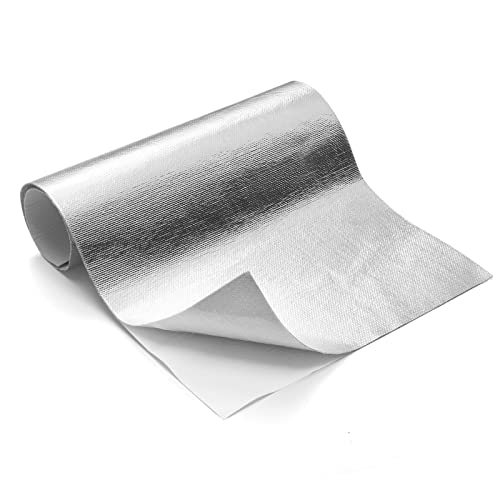
Best for: High-heat environments that require a durable shield with substantial radiant heat reduction. This aluminized barrier reflects heat effectively, and its available sizes can be trimmed to fit specific projects in engine bays or near exhaust paths.
- Reflects up to 95% of radiant heat, aiding in heat management for sensitive components.
- Flexible weave supports varied shapes; multiple sizes allow project-specific fitting.
- 0.032″ thickness balances flexibility with durability.
Limitation: While highly heat-resistant, this sleeve should be installed with careful edge finishing to prevent fraying over time.
SunplusTrade 2″ x 50′ Black Exhaust Wrap Roll
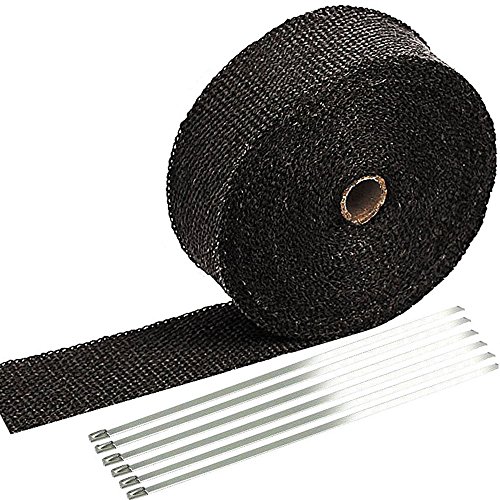
Best for: Exhaust systems, headers, and manifolds where a wrap helps manage radiant heat, reduce under-hood temperatures, and protect nearby components. The roll includes stainless ties for secure installation.
- Withstands up to 1400°F direct heat and 2000°F radiant heat.
- Sturdy abrasion and vibration resistance help maintain performance over time.
- Includes stainless steel ties for quick securing of the wrap ends.
Limitation: Do not use on exhaust pipes without following wrap instructions and proper fabric handling to prevent shedding fibers during installation.
LEDAUT Titanium Exhaust Wrap Roll 2″ x 50′
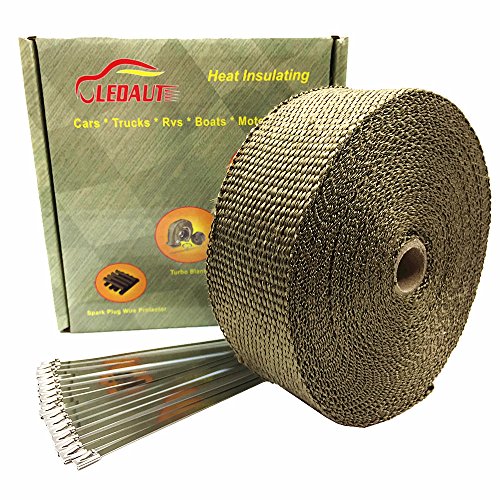
Best for: Tight installations with sharp bends and high-heat exposure near exhaust systems. The titanium wrap is designed for durability and flexible shaping around complex headers and pipes.
- Withstands direct heat and vibration, with strong stainless ties to secure ends.
- Pre-wet prior to wrapping for better fiber management and user comfort during installation.
- Suitable for a variety of exhaust routes, including tight angles and mounting constraints.
Limitation: Users should note proper safety procedures, including gloves and ventilation, to avoid skin irritation from fiberglass fibers during handling.
Buying Guide
What heat level do I actually need?
Consider the maximum temperature your application will face. Exhaust wraps often target radiant heat up to 2000°F, while general engine bay shielding may work well within 850°F to 1200°F ranges. Choose a product with a comfortable margin above your expected peak temperature for reliability.
Is reflective insulation better than bare wraps?
Reflective, aluminized surfaces help deflect radiant heat away from sensitive components. Bare or fibrous wraps provide insulation by reducing heat transfer but may require more careful installation to avoid gaps. For exposed engine areas, reflective options can reduce heat stress on nearby sensors and plastics.
How important is installation ease?
For DIY projects, ease of installation matters. Tape-based solutions simplify flat-area coverage, while sleeving and wrap rolls are better for long runs or curved routes. If you need a quick, clean finish, reflective tape can be the fastest option, but sleeves and wrap rolls may offer longer protection on complex shapes.
What about durability and maintenance?
Durability relates to temperature tolerance, abrasion resistance, and how well the adhesive holds in high heat. Sleeves tend to hold up well in tight spaces and can be reworked if adjustments are needed. Consider lifetime exposure, vibration, and exposure to oils or chemicals when selecting a product.
Are there safety considerations?
Always follow manufacturer guidelines for handling, cutting, and securing wraps. Wear gloves to prevent skin irritation from fiberglass, and ensure that edges are sealed or secured to prevent fibers from escaping into the engine bay. Do not wrap areas where direct flame contact is possible.
What should I buy for a typical engine bay project?
A typical combination could include a reflective tape for firewall and panel shielding, plus a wrap roll for pipes and hoses. This approach provides broad coverage with targeted protection where it matters most, while keeping installation straightforward.
Quick FAQs
- What is the main purpose of heat wrap in cars?
To reduce radiant heat transfer, protect components, and help manage under-hood temperatures.
- Can I use heat wrap on any exhaust pipe?
Most wraps are designed for exhaust pipes and headers, but verify the temperature rating and installation instructions for your specific pipe and vehicle.
- Do I need special tools to install these wraps?
Minimal tools are required—scissors or a sharp knife to cut, and stainless ties or adhesive backing to secure the wrap.
- Will heat wrap affect warranty?
Consult your vehicle’s warranty terms; improper installation could affect certain protections. Follow guidelines from manufacturers.
- How long does installation take?
Installation time varies by project size, complexity, and your experience, from under an hour for a simple wrap to several hours for full engine bay shielding.
- Can these wraps be used on wiring or cables?
Yes, many sleeves are designed for hoses and wires; ensure compatibility with cable gauges and branches to avoid over-tightening or heat gaps.