Best Hydraulic Oil for Log Splitter: Top Picks for Smooth, Reliable Splitting 2026
Finding the right hydraulic oil for a log splitter depends on operating temperature, equipment design, and desired oil life. This guide highlights five robust options that balance longevity, wear protection, and cold-weather performance. Best for heavy-duty wood-splitting tasks, seasonal use, and extended maintenance intervals are noted for each product so buyers can choose confidently.
| Product | Best For | Approx. Lifespan Focus |
|---|---|---|
| TRIAX Powerflow AW 46 Multi-Viscosity HLP Hydraulic Oil | Severe service, high-load log splitters | Up to 6,000 hours |
| TRIAX Powerflow AW 32 Multi-Viscosity HLP Hydraulic Oil | All-season use, general purpose | Up to 6,000 hours |
| ULTRA 1PLUS AW ISO 68 Hydraulic Oil | High-pressure systems, wide temperature range | Wear protection & stability |
| Premium Hydraulic Oil AW ISO 32 (Hapco) | Anti-wear, anti-oxidation | Consistent viscosity |
| LU02322G Log Splitter Hydraulic Fluid Oil, 2 Gallon (212 Main) | 2-gallon capacity, simple replenishment | General use |
The following sections outline why each product stands out for log splitters, who should consider them, and any noted limitations.
TRIAX Powerflow AW 46 Multi-Viscosity HLP Hydraulic Oil
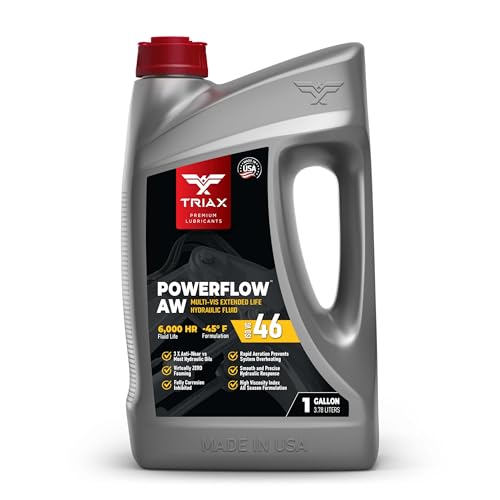
Features include exceptionally long life with a designed 6,000-hour service window and high oxidation resistance. The anti-wear booster pack delivers triple zinc content for enhanced protection under extreme conditions, while a high viscosity index helps maintain performance across temperature changes and reduces cavitation.
Best for: Heavy-duty log splitters operating in demanding environments or with extended maintenance intervals. Choose this if you need maximum component protection and extended oil life.
Caution: Higher zinc content may impact sealed-for-life components in older systems; consult equipment manufacturer guidance if uncertain about compatibility.
TRIAX Powerflow AW 32 Multi-Viscosity HLP Hydraulic Oil

This variant emphasizes long life for severe service with high oxidation resistance and the same anti-wear booster concept. The oil maintains durable performance at multiple viscosities, protecting seals and reducing cavitation across a range of operating conditions.
Best for: All-season log splitters that experience diverse weather. Use this if your splitter runs in varying temps and you want consistent performance.
Caution: While designed for longevity, ensure correct viscosity match for your specific hydraulic circuit to avoid performance issues.
LU02322G Log Splitter Hydraulic Fluid Oil, 2 Gallon

The product is a 2-gallon supply designed for 2-gallon capacity use. The description notes suitability for most hydraulic log splitters and easy-to-use packaging, with manufacturing noted in China.
Best for: Budget-conscious users needing straightforward replacement oil. Choose this for standard, non-specialized hydraulic oil needs.
Caution: General-use specification may not reflect heavy-duty or extreme-temperature requirements; verify your machine’s specifications before use.
ULTRA 1PLUS AW ISO 68 Hydraulic Oil

Designed for high-pressure industrial and mobile hydraulic applications, this ISO 68 oil offers broad temperature stability and seals protection. It emphasizes wear reduction and robust rust and corrosion prevention through premium additives.
Best for: Systems operating under high pressure or wide temperature swings where consistent viscosity is critical. Opt for this if your log splitter endures heavy use in extreme heat or cold.
Caution: ISO 68 viscosity is thicker; verify that your pump and hoses are compatible with this grade to avoid sluggish operation.
Premium Hydraulic Oil AW ISO 32 Hapco
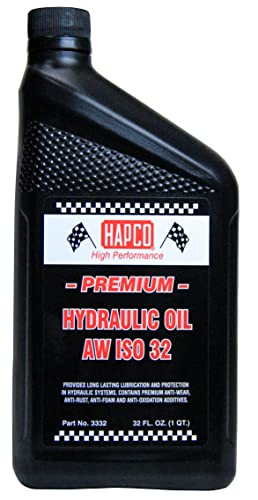
Hapco’s premium AW ISO 32 hydraulic oil focuses on anti-wear, anti-rust, anti-foam, and anti-oxidation properties. It aims to maintain stable viscosity and protect internal components from oxidative damage while reducing metal-to-metal contact.
Best for: Lightweight to moderate workloads where anti-wear and anti-oxidation properties are prioritized, or for older equipment requiring dependable protection without high viscosity.
Caution: ISO 32 viscosity may be too light for some heavy-duty log splitters; confirm your system’s recommended viscosity before use.
Buying Guide: Key Considerations For Hydraulic Oil In Log Splitters
- Oil viscosity: Match the recommended ISO grade (e.g., 32, 46, 68) to your splitter’s pump and cylinder requirements. Higher numbers indicate thicker oil with different lubrication characteristics.
- Wear protection: Look for anti-wear and anti-oxidation additives to extend pump life and protect seals during heavy or prolonged use.
- Cold-weather performance: If splitting in freezing temperatures, consider oils with low pour points or proven cold-flow characteristics to ensure reliable start-up and operation.
- Oil life and maintenance: Some products claim extended service life; verify compatibility with your maintenance schedule and manufacturer guidance.
- Seal compatibility: Ensure chosen oil is compatible with your hose materials, seals, and pump elastomers to prevent leaks or swelling.
- Contaminant protection: Some formulations include anti-foaming and rust inhibitors to reduce system contamination and corrosion.
- Capacity and packaging: For easier replenishment, select a size that fits your maintenance routine and storage space.
Frequently Asked Questions
- What is the best hydraulic oil for log splitters in cold weather? – Oils with good low-temperature pour points and stable viscosity, such as multi-viscosity blends designed for all-season use, typically perform better in cold conditions.
- Should I use ISO 32 or ISO 46 hydraulic oil in my log splitter? – It depends on your machine’s pump design and recommended viscosity; higher-viscosity oils (like ISO 46) are thicker and may provide better film strength in heavier use, while ISO 32 is lighter and can improve cold-start performance.
- Can I mix different brands of hydraulic oil? – Mixing oils can alter additive packages and viscosity, potentially reducing protection. If possible, avoid mixing and follow the manufacturer’s recommendations.
- What maintenance frequency should I expect with long-life hydraulic oils? – Long-life formulations aim to extend change intervals, but follow your equipment manual and monitor oil color, foaming, and performance signs to decide scheduling.
- Is anti-foam important for log splitters? – Yes, anti-foam properties help prevent air entrainment, ensuring steady hydraulic pressure and smoother operation.
- Do all log splitters require the same viscosity? – No. Always refer to the splitter’s owner’s manual for the recommended viscosity grade and any OEM guidelines.