Best in Line Fuel Pump Options for Fuel Injection Systems 2026
Choosing the right external inline fuel pump for fuel injection systems hinges on flow capability, pressure range, and fitment for your build. This guide targets buyers looking to upgrade or replace inline EFI pumps with reliable, aftermarket options. The top picks below are best for high-performance street setups, race-inspired builds, and custom EFI installations where external pumps outside the tank are preferred. The table summarizes key strengths and ideal users for each product.
| Product | ||
|---|---|---|
| CarBole External In Line Fuel Pump | High-PSI EFI applications, aftermarket systems | Broad compatibility; solid pressure range |
| JDMSPEED Universal External High Pressure 255 LPH | High-flow EFI builds requiring external pump | High flow at multiple pressures; robust mounting kit |
| EVIL ENERGY External Inline Fuel Pump 300 LPH | Consistent high flow for modern EFI systems | High flow, universal 12V, strong temperature range |
| SPBREW External Inline Fuel Pump 255 LPH | High horsepower, leak-free connections | Leak-free, precise multi-pressure delivery |
| DTMAP Electric Fuel Pump 200 LPH | General EFI upgrades, modest output needs | Clear EFI-use focus; easy fit for many 12V systems |
CarBole External In Line Fuel Pump

Best for: Enthusiasts building aftermarket EFI systems that need a reliable external pump outside the tank. This model replaces 0580464070 and similar units, with a standard 12V operation and a wide pressure window. The pump’s specification shows a 5-8 bar (72.5-116 psi) range and flow around 120 LPH at 6.0 bar (about 31.7 GPH at 87 psi). Inlet is ½” and outlet ¼”. It’s suitable for applications demanding robust inline fuel delivery in non-OEM setups. A potential limitation is that some vehicles may require adapters or additional fittings to match existing lines. Best for: aftermarket, non-tactory EFI installs where external mounting is feasible.
Universal External In Line Fuel Pump High Pressure 12V

Best for: Those needing a high-pressure external pump with a complete mounting kit. The package includes mounting brackets, gaskets, connectors, and hardware. It is a universal pump, so some adaptation may be required for your specific application. Limitations include the lack of installation instructions and potential need for skilled setup to ensure proper sealing and electrical connections. Good for: custom EFI rigs where a sturdy, bracketed pump is advantageous.
EVIL ENERGY External Inline Fuel Pump 300LPH
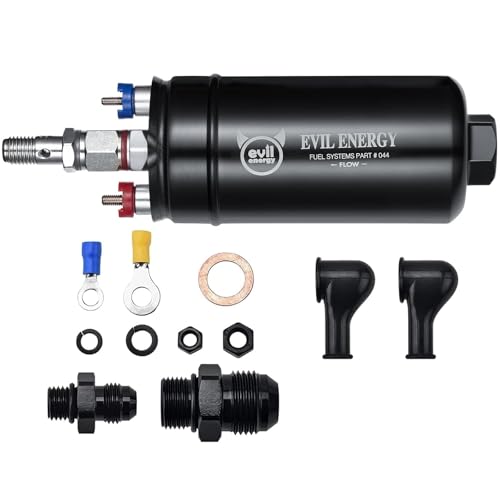
Best for: High-flow EFI demands where a 12V unit must deliver strong, steady capacity. With a test flow around 200-300 LPH depending on pressure, and an operating range suited to EFI systems, this pump emphasizes reliable flow at 75 PSI and compatibility with gasoline and race fuels. Limitation: in some setups, high-pressure regulators or return lines might be required to prevent pressure spikes. Choose this if you need substantial headroom for performance tuning.
EVIL ENERGY External Inline Fuel Pump 300LPH 60MM Bracket
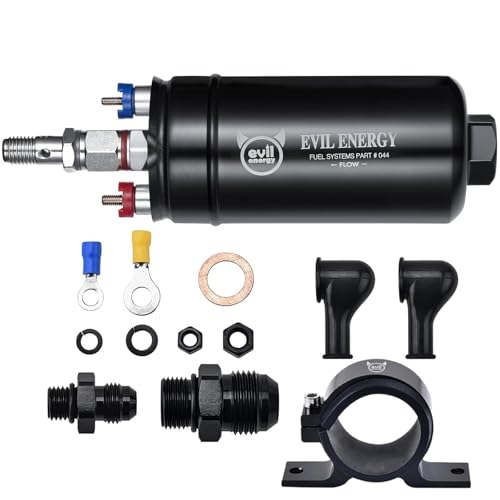
Best for: Similar high-flow EFI applications that benefit from a compact 60mm bracket design. It shares the same flow performance as the standard 300 LPH EVIL ENERGY pump, with mounting flexibility. Limitation: installation may require careful bracket alignment and compatible fittings to ensure a secure seal. This option is better for tight engine bays where bracketed mounting is advantageous.
High Flow JDMSPEED External Fuel Pump with Kit

Best for: External installations requiring a full installation kit and robust hardware. This JDMSPEED pump is rated for 255 LPH and supports 15-120 PSI, with the design intended for inline/outside-the-tank mounting. It’s ideal for builders who want a turnkey hardware set. Limitation: some setups may still need additional adapters for line compatibility.
DTMAP Electric Fuel Pump 200 LPH

Best for: EFI builds that require a straightforward external inline pump with moderate flow and precise high-pressure capability. The 200 LPH rating with 43–75 PSI (range) makes it a practical choice for many street and performance applications. Limitation: lower maximum flow compared to high-performance 255–300 LPH options, which might limit upgrades to very high horsepower engines.
Buying Guide: Key Considerations When Choosing an In-Line EFI Pump
- Flow capacity: Match pump flow to engine horsepower and injector size. Higher horsepower often needs 255–300 LPH; street setups might be comfortable with 200–255 LPH.
- Operating pressure: EFI systems commonly require 40–75 PSI. Ensure the pump can sustain your desired operating pressure and pair with a regulator as needed.
- Alloy and build quality: Brass/steel/brass-and-steel assemblies resist wear and corrosion and suit high-demand environments.
- Mounting and fittings: External pumps must connect to ½” inlet and ¼” or ⅜” outlets in many kits. Check brackets, clamps, and gasket availability for your vehicle.
- Compatibility: Some pumps list universal fit but require adapters or professional installation for exact line and connector matches.
- Installation skill: Some units come with full hardware; others require additional fittings and knowledge to integrate with existing EFI plumbing.
Frequently Asked Questions
- What is an inline fuel pump used for in EFI systems?
It provides consistent fuel pressure and volume to the injectors, typically mounted outside the fuel tank for easier serviceability and customization.
- Do I need a regulator with an inline pump?
Yes, most EFI systems require a pressure regulator to maintain the correct fuel pressure across varying engine loads.
- Can inline pumps handle diesel or race fuels?
Some pumps are designed for gasoline and race fuels; check the manufacturer’s compatibility for diesel or ethanol blends before use.
- Is extra flow always better?
Not always. Excess flow can overwhelm injectors or cause pressure instability without proper regulators and return lines.
- What mounting considerations matter?
Consider space, bracket availability, vibrations, and heat exposure. A rigid mounting kit reduces vibration and wear on fittings.
- Are these pumps universal?
Many are marketed as universal, but some installations require adapters and professional tuning to ensure proper fit and fuel delivery.