Best Inline Fuel Pumps for Fuel Injection: Top Picks for Precision EFI Upgrades 2026
Finding the right inline fuel pump for fuel injection depends on your engine’s needs, whether you’re chasing higher flow, steadier pressure, or simple compatibility with modern EFI systems. This guide names five reliable options and explains who benefits most from each. Ideal buyers include performance enthusiasts upgrading turbo or supercharged setups, builders replacing failing pumps, and DIY enthusiasts seeking universal, easy-to-install solutions. The table below compares the five selected pumps on key points to help you decide quickly.
| Product | Best For | Key Benefit |
|---|---|---|
| EVIL ENERGY External Inline Fuel Pump | Performance cars needing high flow | High flow up to 300 LPH with 75 PSI operating pressure |
| CarBole External In Line Fuel Pump (116 PSI) | High-PSI EFI builds | 116 PSI capability with 120 LPH at 6 bar and 100 LPH at 7 bar |
| JDMSPEED High Flow 255LPH Inline Pump (GSL392) | External mounting and LS-style systems | 255 LPH flow, 15-120 PSI range, external mounting kit included |
| Yinlowa GSL392 Inline Pump + 58 PSI Regulator | LS-based EFI swaps needing regulator and filter | 58 PSI regulator included with 10 micron filter for clean fuel |
| DTMAP 200LPH External Inline Pump | Universal EFI systems | 200 LPH, 43-75 PSI, suitable for many 12V EFI setups |
Notes: All pumps listed are designed for inline (external) installation and are compatible with 12V EFI systems. Some models require adaptation for your exact fuel line sizes or mounting arrangements. Always confirm fitting sizes and pressure ranges before purchase.
EVIL ENERGY External Inline Fuel Pump
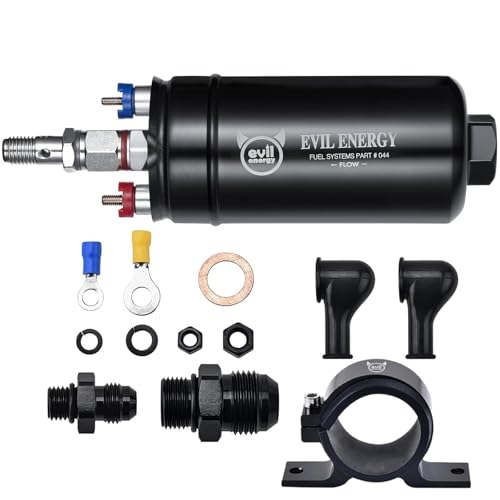
Brand: EVIL ENERGY
Features: This inline pump is designed for 12V EFI systems with a flow rate up to 300 LPH at 75 PSI. Operating temperature range supports broad ambient conditions. It is compatible with gasoline and race fuels. Best for customers building or upgrading high-flow EFI setups that demand reliable, high-volume fuel delivery. Caution: Verify that the 12V trigger and fuel line connections match your vehicle’s layout to avoid misfit mounting.
Best for: High-performance street or track vehicles needing strong flow without adding complexity to the fuel system.
CarBole External In Line Fuel Pump (116 PSI)

Brand: CarBole
Features: Replacement for 0580464070 and similar models, universal external inline pump with external mounting. Operational pressure ranges from 72.5 to 116 PSI with 120 LPH at 6 bar and 100 LPH at 7 bar. Inlet ½” and outlet ¼” ports. Best for: Aftermarket EFI systems requiring higher pressure delivery and a compact mounting footprint. Caution: Not OEM; some installations may need adapters or fittings to align with existing lines.
JDMSPEED High Flow 255LPH Inline Pump (GSL392)

Brand: JDMSPEED
Features: Inline/external design with mounting clamps and cushions included. Flow rate 255 LPH, operating pressure 15-120 PSI. Kit includes fittings, washers, and mounting hardware. Best for: Car builders seeking a robust external pump for LS-based or similar EFI systems that require higher flow. Caution: Some applications may require regulator adjustment to achieve target rail pressure.
Yinlowa GSL392 Inline Fuel Pump with Regulator

Brand: Yinlowa
Features: 58 PSI fuel regulator with 6AN fittings, LS swap-compatible inline pump. Delivers regulated pressure to the rail and returns unused fuel to the tank, backed by a 10 micron filter. Best for: LS-based EFI builds requiring predictable pressure and integrated filtration. Caution: Regulator and fittings must be correctly tuned to match your engine’s fuel demands.
DTMAP Electric Fuel Pump 12V 200LPH

Brand: DTMAP
Features: 200 LPH at 43–75 PSI, designed as an external inline pump for EFI systems. Suitable for a wide range of 12V gas vehicles and custom builds. Best for: DIY enthusiasts seeking a versatile pump that handles a broad PSI range. Caution: Not suitable for carbureted engines or very low-pressure fuel systems; ensure compatibility with your EFI requirements.
Buying Guide: Inline Fuel Pumps for Fuel Injection
- What flow rate do I need? Consider engine displacement, RPM range, and required horsepower. Higher flow (LPH) supports high-performance builds but may require regulator adjustments.
- What operating pressure is required? EFI systems typically need 40–100+ PSI. Ensure the pump’s pressure range covers your rail pressure target and that a compatible regulator is available.
- Should I choose external vs. in-tank? Inline pumps are easier to retrofit and service but ensure proper cooling and placement. In-tank pumps often run cooler and quieter but require tank access.
- Are adapters and fittings included? Many kits come with mounts, clamps, and various hose fittings. Confirm compatibility with your fuel lines (size and thread type).
- What about fuel compatibility and filtration? Some models pair pumps with built-in regulators and filters. Clean fuel helps protect injectors and the fuel rail.
- Is the system kit-needed or standalone? Some options include mounting hardware and gaskets, simplifying installation, while others are pure pumps requiring extra components.
- How much space do I have? Inline pumps vary in length and mounting footprint. Measure available space and check for clearance near heat sources and moving parts.
Quick Compatibility Tips
- For LS-based builds, consider pumps with regulator options or regulator compatibility for steady pressure delivery.
- If you plan boost or nitrous use, favor higher-PSI capable pumps and ensure the fuel system can safely handle surge and demand.
- Always use appropriate return lines or pressure relief to prevent over-pressurization and injector damage.
FAQ
- What is inline fuel pump pressure range? Most inline EFI pumps operate between roughly 40 and 120 PSI, but models vary. Check the exact PSI range for your chosen pump.
- Can I install an inline pump outside the tank? Yes, inline external pumps are designed for outside-the-tank installation and often include mounting hardware.
- Do I need a regulator with an inline pump? Many EFI systems require a regulator to set rail pressure. Some pumps include a regulator; others require a separate unit.
- Will a high-flow pump cause issues with stock fuel rails? Potentially; ensure your fuel rails, lines, and regulator are rated for the higher flow and pressure.
- Is a regulator necessary for LS swaps? An appropriate regulator is typically used to maintain consistent rail pressure in LS-based EFI configurations.
- Are these pumps compatible with diesel? Most listed pumps are designed for gasoline in EFI systems; verify compatibility before use in diesel applications.