Best Non-Ethanol Fuel Solutions for Lawn Mowers and Small Engines 2026
If you rely on non-ethanol gas to protect your lawn mower and small engines, choosing the right fuel treatment matters. This guide highlights five top non-ethanol-friendly products designed to reduce varnish and gum buildup, stabilize fuel, and improve starting reliability. Each product is explained with who it’s best for, key benefits, and a practical caution. The goal is to help readers select treatments that align with non-ethanol fuel needs and common lawn equipment challenges.
| Product | Best For | Why It Stands Out | Notes |
|---|---|---|---|
| STA-BIL Fast Fix Small Engine Treatment | Small engines facing rough running or starting issues | Cleans carburetors, injectors, and fuel system; removes water; tackles ethanol effects | Versatile for lawn mowers and small engines |
| Toro Premium Fuel Treatment 0.5 oz (2 Pack) | Multiple small power equipment | Genuine Toro formula; helps maintain clean, reliable performance | Two-pack for broader coverage |
| Lucas Oil Ethanol Gas Treatment | Gasoline with ethanol risk of varnish and deposits | Proven deterrent to varnish buildup and fuel system issues | Made in the USA; simple add-on |
| Ethanol Shield Fuel Stabilizer (1 Gallon) | Long-term storage and fuel aging concerns | Stabilizes fuel up to 3 years; treats up to 1280 gallons | OEM-tested protection |
| Husqvarna Fuel Treatment 12 oz | Husqvarna and other small engines | Treats up to 24 gallons; designed for reliability | Simple, targeted dosing |
STA-BIL Fast Fix Small Engine Treatment

This STA-BIL product is designed for rough-running or hard-starting engines. It breaks down gum and varnish in carburetors and fuel injectors, helping restore smoother operation without disassembly. It also removes water and mitigates ethanol-related issues, which is useful for engines that run on ethanol-blended gasoline. Best for gardeners, small engine owners, and homeowners who want quick restoration of performance. A potential limitation is that results can vary with long-standing buildup or severe damage.
Toro Premium Fuel Treatment System
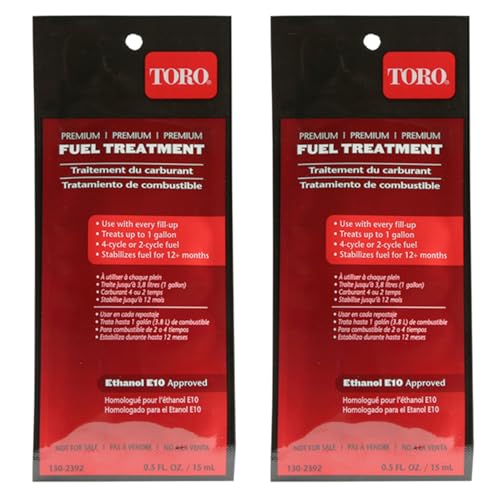
Toro’s Premium Fuel Treatment comes in a two-pack and is designed to improve engine performance for lawnmowers, snow blowers, weed wackers, leaf blowers, and other small power equipment. The product is positioned for regular use with every fill-up to help protect two- and four-cycle engines. It’s a solid option for homeowners who own multiple small engines and want consistent maintenance. A possible caveat is that it’s a fuel additive rather than a robust carburetor clean in severe cases.
Lucas Oil Ethanol Gas Treatment

Lucas Oil Ethanol Gas Treatment is a straightforward additive designed to protect small engines from ethanol-related deposits and varnish. It’s marketed as a clean-up-and-protect solution for engines that may experience rough running due to ethanol exposure. It’s best for users who want an ethanol-focused treatment that can help maintain fuel system cleanliness. A limitation is that it does not explicitly claim non-ethanol formulation but targets ethanol-related issues with performance improvements.
Ethanol Shield Fuel Stabilizer (1 Gallon)

Ethanol Shield Stabilizer protects fuel for up to three years and is formulated to prevent ethanol-related problems in all gasoline types. The product stabilizes fuel and helps keep injectors and carburetors clean through a proprietary detergent system. It’s a strong choice for seasonal storage and for users who want long-term fuel reliability. A caveat is that its primary strength is stabilization, not heavy-duty cleaning of injectors in the short term.
Husqvarna Fuel Treatment 12 oz

Husqvarna’s Fuel Treatment is a compact 12-ounce bottle designed to treat up to 24 gallons of gasoline. It’s tailored for Husqvarna and other small engines, offering straightforward dosing and fuel system protection. Best for owners of Husqvarna equipment or those seeking a small-bottle option with direct compatibility guidance. A potential limitation is that it covers a modest number of gallons per bottle, so frequent users may need more frequent applications.
Buying Guide: Key Considerations for Non-Ethanol Fuel Care
- Fuel stability vs. cleaning power: If you store gasoline for long periods, prioritize stabilizers like Ethanol Shield or similar products that promise extended storage and anti-corrosion benefits.
- Engine type and usage: For seasonal equipment (lawnmowers, trimmers), regular stabilization and small-scale cleaning additives are often sufficient. For stubborn varnish, look for products that claim carburetor and injector cleaning.
- Length of non-ethanol requirement: If you specifically need non-ethanol fuel, verify that the product addresses ethanol-related issues without relying on ethanol-blended fuel compatibility claims.
- Compatibility and dosing: Check the recommended gallons per bottle and compatibility with your engine’s carburetor type and fuel system. Overuse is unnecessary and may be wasteful.
- Storage and climate considerations: In regions with extreme temperatures, Long-term stabilizers may offer greater protection, especially for equipment stored indoors or unused for months.
FAQ
- What is the primary benefit of using a fuel stabilizer for lawn mowers?
Stabilizers prevent fuel degradation during storage, helping the engine start reliably after periods of non-use and reducing corrosion in the fuel system.
- Should I use ethanol-specific treatments for non-ethanol gas?
Choose treatments designed to address ethanol-related issues if your gas contains ethanol. If you truly use non-ethanol fuel, select products that emphasize cleaning and protection without ethanol-specific claims.
- Can these products improve starting performance?
Yes, especially products that clean carburetors and fuel injectors or remove water, which can contribute to rough starts and stalling.
- How often should I apply fuel treatment?
Follow the product’s label guidance, typically with every fuel fill-up or before prolonged storage for stabilizers and cleaners with maintenance purposes.
- Are there any drawbacks to using these additives?
Overuse or incompatibility with certain engines can lead to unexpected results. Always verify compatibility with your specific equipment and avoid mixing multiple additives unless advised by the manufacturer.
- What should I do if I still experience rough running after treatment?
Inspect the air filter, fuel lines, and carburetor for blockages. If issues persist, consult a qualified technician as the problem may lie beyond fuel quality.