Best Rust Remover for Rims: Top Rim-Safe Options for Cars, Bikes, and More 2026
Rust removal for rims requires products that dissolve iron deposits without damaging finishes. This guide highlights five top choices that work well on wheels, brake dust, and embedded rust. Each option is suited to different rim materials and finishes, such as chrome, painted, powder-coated, or polished metal. Use these picks to decide which remover best fits your vehicle and maintenance routine.
| Product | Best For | Key Benefit |
|---|---|---|
| Rust-Oleum Rust Dissolver Trigger Spray Gel | General metal rims; DIY projects | Gel formula clings and dissolves rust quickly |
| Turtle Wax Hybrid Solutions Iron Remover | All wheels and exterior surfaces | Color-change indicator shows iron presence |
| Adam’s Iron Remover | Vehicles with clay bar prep | pH-neutral; safe on clear coats |
| Chemical Guys Decon Pro Iron Remover | Professional-grade wheel detailing | Purple color change indicates cleaning progress |
| CRC Evapo-Rust | All-metal rims and hardware | Water-based, non-corrosive rust removal |
Rust-Oleum Rust Dissolver Trigger Spray Gel

Best for: DIY enthusiasts working on exposed metal rims and basic automotive projects. This spray gel clings to iron and steel, dissolving medium to light rust in 10–30 minutes. Heavier rust may need a second application. It requires no scrubbing; simply rinse and wipe to prep for painting. Caution: avoid prolonged contact on sensitive finishes and plastics near the wheel edges.
Turtle Wax Hybrid Solutions Iron Remover
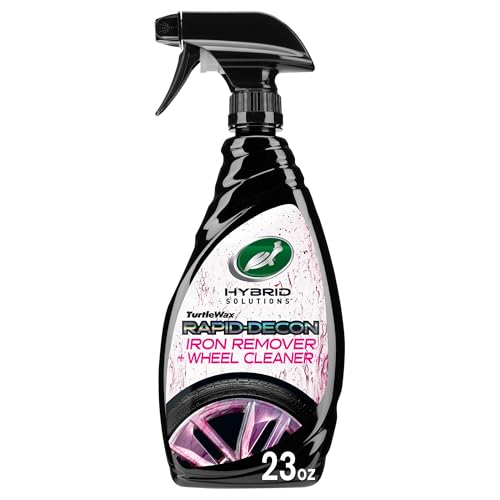
Best for: Vehicle wheels and exterior surfaces needing a deep clean. This pH-neutral, acid-free formula removes embedded iron particles, brake dust, and road grime. It’s versatile enough for painted surfaces, clear coats, polished metal, chrome, glass, and all wheels. A color-changing effect shifts from clear to purple on contact with iron, providing real-time feedback on decontamination. Limitations: avoid over-saturation near trim or matte finishes where pooling could occur.
Adam’s Iron Remover (16oz)

Best for: Detailers who prep surfaces before clay bar, waxing, or coating. Adam’s Iron Remover is pH-neutral, acid-free, and designed to minimize staining on trim while remaining safe on clear coats and painted surfaces. It activates quickly and shows the iron deposits as a purple bleed. Caution: avoid overspray on exterior plastic, trim, and highly metallic finishes to prevent staining or residue buildup.
Chemical Guys Decon Pro Iron Remover

Best for: Pro-grade wheel detailing and professional use. Decon Pro targets iron deposits, brake dust, and road grime on wheels, brakes, calipers, tires, and exterior surfaces. The color-changing action turns purple as it reacts with iron, offering measurable progress. Limitations: ensure robust ventilation and avoid prolonged exposure on sensitive trim or non-metal surfaces to prevent potential staining.
Chemical Guys Diablo Wheel Cleaner 2 Pack

Best for: Gear-heavy wheel detailing with multiple finishes. Diablo Wheel Cleaner is safe for chrome, painted, powder-coated, and clear-coated finishes, offering a foaming action that clings for better dwell time. It removes brake dust and grime with less scrubbing. Caution: test on sensitive coatings first and avoid prolonged contact with rubber seals or tire sidewalls to prevent staining.
Chemical Guys Wheel Cleaner Spray – Signature Series

Best for: Enthusiasts seeking a high-performance wheel cleaner that treats finishes with care. The Signature Series formula targets heavy brake dust and road grime on chrome, painted, powder-coated, anodized, and clear-coated wheels. It features a fast-acting foaming action that clings to surfaces for easier rinsing. Caution: may require more dwell time on heavily soiled wheels; test on delicate finishes first.
Evapo-Rust ER012 Heavy Duty (128 oz.)

Best for: Users seeking a large-volume, non-corrosive rust remover for multiple parts. Evapo-Rust ER012 is water-based with no acids, solvents, or fumes, making it suitable for automotive parts, hardware, tools, cookware, and antiques. It requires immersion and provides rust removal without sanding. Caution: follow container guidance for contact time and ensure thorough drying after treatment to prevent residue on delicate surfaces.
Buying Guide
What to consider when choosing a rust remover for rims:
- Finish compatibility: Check if the remover is safe for chrome, painted, powder-coated, or clear-coated rims to avoid damage.
- Form and application: Gel, spray, or immersion formulas offer different dwell times and ease of use. Choose based on wheel access and complexity of rust.
- Color-change indicators: Some products visibly change color on contact with iron, aiding application accuracy.
- Safety and odor: Water-based, non-corrosive, and low-odor formulas are preferable for indoor use and near sensitive components.
- Volume and coverage: For multiple wheels or large rims, select larger volumes to reduce reordering frequency.
- Environmental and surface care: Prefer products that minimize staining on trims and plastics and that rinse clean without leaving residues.
FAQ
- What is the best rust remover for rims with chrome finishes?
– A product labeled safe for chrome and clear coatings, such as pH-neutral or non-abrasive formulas, is recommended to minimize risk of dulling or staining. - Can I use iron removers on painted wheels?
– Yes, many are safe for painted surfaces, but test a small area first and rinse promptly to avoid potential etching or discoloration. - Do rust removers require scrubbing?
– Some formulas are designed to require little to no scrubbing; others may need light agitation. Gel and spray types are often easier to apply without scrubbing. - Are iron removers color-changing?
– Several products turn purple or another color on contact with iron, helping you gauge coverage and effectiveness. - Is Evapo-Rust safe to use on all metals?
– It is a non-corrosive, water-based rust remover suitable for many metals, but always follow product instructions and test on sensitive surfaces. - Should I seal rims after rust removal?
– It’s common to apply paint, coating, or a protective sealant after rust removal to prevent future rust and ease maintenance.