Best Solar Panels for Semi Trucks: Efficient Off-Grid Charging on the Road 2026
When searching for solar panels for semi trucks, look for high-efficiency flexible panels, rugged mounting options, and reliable power output for long-haul journeys. This guide targets buyers seeking lightweight, curved-surface-friendly solutions that fit truck roofs and trailers. The top five selections below are chosen for durability, adaptability to trucking needs, and clear value for money. Each entry explains who it’s best for and why it was selected, plus practical cautions to consider in real-world use.
Summary table of selected products:
| Product | Brand | Type | Best For |
|---|---|---|---|
| 800W Flexible Kit (2x400W) | MHZSJLW | Semi-Flexible Monocrystalline | High-capacity charging on curved truck roofs |
| 200W Flexible Panel | Renogy | Flexible Monocrystalline | Curved surfaces, light truck setups |
| 100W Flexible Panel | Renogy | Flexible Monocrystalline | Stealth installs on low-profile trailers |
| 200W Flexible Kit | Callsun | ETFE Flexible Modules | All-black stealth look for RVs and campers |
| ECO-WORTHY 200W Kit | ECO-WORTHY | Monocrystalline 200W Kit | Balanced power for mid-size trucking rigs |
800W Solar Panel Kit, 2x400W Flexible Monocrystalline RV Solar Panel

Best for: High-capacity semi truck setups needing robust energy harvest on curved or flat roof surfaces. This kit uses ETFE material with a 23%-25% conversion rate and includes four mounting holes for secure installation. It’s designed for direct bonding to surfaces and is weatherproof for outdoor use. Consider this option if you need substantial daily output to keep auxiliary systems charged during long hauls.
- Pros: High efficiency; durable build; plug-and-play connections.
- Cons: Higher upfront cost due to wattage; may require larger mounting space.
Renogy 200 Watt Flexible Solar Panel

Best for: Truckers with curved roof surfaces who want strong daily energy output and a lightweight alternative to rigid panels. It delivers around 1000 Wh daily in good sun conditions and is bendable up to 240 degrees for difficult mounts. The half-cut PERC cell tech improves efficiency, making it a reliable mid-range choice.
- Pros: High flexibility; good daytime power; low weight.
- Cons: Higher price per watt than smaller panels.
Renogy Flexible 100W Solar Panel

Best for: Smaller trucking setups or trucks needing a stealth, ultra-thin option on curved roofs. This panel weighs less than rigid equivalents and remains glare-free, with a slim bite that makes rooflines nearly seamless. It uses half-cut PERC cells for better energy capture.
- Pros: Ultra-thin profile; light; discreet appearance.
- Cons: Lower total wattage means more panels may be needed for large loads.
Callsun 200W Flexible Solar Panel Kit

Best for: RVs, motorhomes, or vans seeking an all-black stealth aesthetic with high flexibility. The kit emphasizes a 240° bend range and a very thin 0.1-inch profile, making it suitable for low-clearance installs. It’s well-suited for curved roofs where minimal visibility is desired.
- Pros: Stealthy look; strong bendability; ETFE coating resists weathering.
- Cons: All-black appearance can make monitoring cell shading more noticeable in certain layouts.
ECO-WORTHY 200 Watts Kit
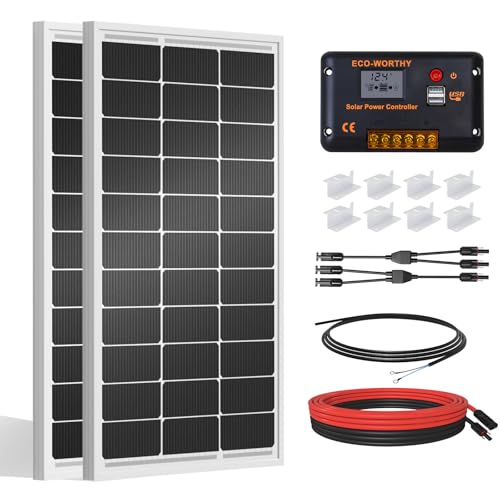
Best for: Truckers who want a complete kit with controller and cables for a straightforward installation on mid-sized rigs. The 200W kit uses high-efficiency monocrystalline panels and a 30A PWM controller. It supports a substantial daily output and durability for long road use.
- Pros: Integrated components; robust frame; wide compatibility.
- Cons: PWM controller may be less efficient than MPPT in some scenarios; installation space required for two panels.
Buying Guide: Key Purchase Considerations
- Flexibility and fit: For semi trucks, prioritize panels rated for curved surfaces (up to 240° bend) and low profile designs to minimize wind resistance and clearance issues.
- Efficiency vs. total watts: Higher wattage panels provide more energy per day, but weight, space, and mount durability matter on moving vehicles. Trade-offs between ETFE vs. PET coatings affect weather resistance and glare.
- Weight and mounting: Look for lightweight modules with durable mounting hardware. Corrosion-resistant frames and weatherproof connectors extend service life on the road.
- Power management: MPPT controllers can extract more energy in variable sun conditions, while PWM controllers are simpler and usually more affordable. For long routes with limited sun, MPPT can offer noticeable gains.
- System integration: Ensure compatibility with 12V/24V battery banks common in commercial trucks. Consider pre-wired kits with cables and junctions for easier installation.
- Durability under travel conditions: Panels should resist hail, wind, and temperature swings. ETFE modules typically offer superior durability and clarity in harsh environments.
FAQ
- Q: Which panel is best for curved truck roofs? A: Flexible Monocrystalline panels with high bendability (up to 240°) and ETFE coating are ideal for curved surfaces.
- Q: Do I need an MPPT controller for truck solar? A: MPPT can increase energy capture in variable sun, beneficial for long hauls with fluctuating conditions.
- Q: Are 200W panels enough for a semi truck? A: It depends on load and auxiliary demand; multiple panels may be needed for larger energy requirements.
- Q: Can I install panels myself? A: Yes, if you follow mounting instructions, use proper sealant, and ensure waterproof connections; consider professional help for complex roof layouts.
- Q: What maintenance is required? A: Regularly inspect wiring seals, clean surfaces, and check connectors for corrosion or wear in extreme climates.