Best Spray Paint for Tires: Quick Ways to Refresh Rims and Tires Safely 2026
If you’re aiming for a showroom look with durable wheel color, you’ve found the right guide. This article highlights five top spray paints for tires and rims, chosen for long-lasting finish, compatibility with aluminum and steel wheels, and ease of use. Ideal buyers include DIY detailers, car enthusiasts refreshing wheels, and pros seeking fast-drying options. The table below compares the best options at a glance, followed by in-depth notes on each product.
| Product | Finish | Best For | |
|---|---|---|---|
| Rust-Oleum 368076 High Performance Wheel Spray Paint | Gloss Black | Aluminum/Steel wheels and plastic hubcaps | Up to 8 sq ft per can |
| Dupli-Color TP101 Tire Paint | Black | Factory-look tire restoration | Dry to touch in 20 min |
| NADAMOO Aluminum Wheel Spray Paint | Gloss Black | Wheel recolor and protection | 10-12 sq ft per can (two light coats) |
| Rust-Oleum 366438 High Performance Wheel Spray Paint | Matte Black | Durable, rust-preventive wheel finish | Up to 8 sq ft per can |
| CERAKOTE Rapid Ceramic Tire Coat | Showroom deep tire black | Non-greasy, long-lasting tire coating | Apply with included foam applicator |
Rust-Oleum 368076 High Performance Wheel Spray Paint
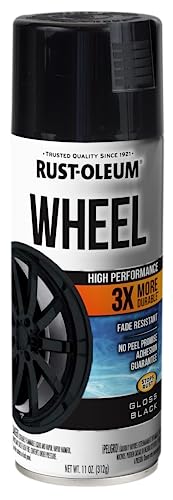
Finish: Gloss black. Best for wheels and hubcaps made of aluminum, steel, or plastic. Advantages include a durable finish and rust prevention, with a quick dry time and broad coverage (up to 8 sq ft per can). This makes it a solid choice for upgrading a full set of wheels with a uniform look. Use caution on textured or heavily curved wheel surfaces; multiple light coats yield better adhesion and a smoother finish.
Who it’s for: DIY detailers seeking a reliable, fast-drying wheel makeover that resists rust in everyday driving conditions. Why selected: It balances durability, ease of use, and compatibility with common wheel materials.
Dupli-Color TP101 Tire Paint – Black

Finish: Black, designed for restoring tires to a factory-like appearance. It adheres to rubber with Shine-Last Technology for a long-lasting finish and dries to the touch in about 20 minutes. It’s suitable for touch-up work and covering minor wear around tire lettering. A potential limitation is color uniformity on heavily worn tires or textured surfaces where multiple light coats may be required for even coverage.
Who it’s for: Anyone seeking a quick, factory-style tire restoration without bulky equipment. Why selected: Fast drying, durable rubber adhesion, and a neat, consistent look.
NADAMOO Aluminum Wheel Spray Paint

Finish: Gloss Black with a semi-gloss look depends on coats. This spray paint is designed for recoloring and protecting wheels made of aluminum and steel, or other plastic hubcaps. It offers weathering resistance to acids, alkalis, salts, moisture, and UV aging, aiming for a brand-new appearance. Drying time is about 30 minutes to touch, and one can covers 10-12 sq ft with two light coats. A limitation is that heavier coats can extend dry times and affect texture smoothness.
Who it’s for: Wheel restorers needing strong weather resistance and a fresh finish. Why selected: Strong protective properties paired with a relatively wide coverage area.
Rust-Oleum 366438 High Performance Wheel Spray Paint

Finish: Matte Black. This option mirrors the glossy variant but with a matte finish that hides minor wheel texture better and reduces reflections. It shares the same core advantages: quick drying (about 10 minutes) and coverage up to 8 sq ft per can. A caution is that matte finishes may appear less uniform on heavily worn surfaces, requiring careful prep and light, even coats for best results.
Who it’s for: Drivers wanting a low-sheen, durable wheel look. Why selected: Matte finish adds a stylish, modern feel while protecting rims from rust and corrosion.
CERAKOTE Rapid Ceramic Tire Coat

Finish: Showroom deep tire black with a non-greasy feel. This tire coating aims to deliver a long-lasting shine and resistance to dirt and road grime. Application is straightforward: wash tires, apply with a foam applicator, and wipe off excess. It’s designed to minimize sling and maintain a clean, professional look between tire rotations. A caveat is that ceramic coatings can require more attention to surface prep for maximum efficacy.
Who it’s for: Enthusiasts seeking a showroom-grade tire shine with long-lasting protection. Why selected: Ceramic chemistry offers enhanced durability and a non-greasy finish, reducing dirt pickup over time.
Buying Guide: Key Considerations For Tire And Rim Sprays
- Finish desired: Gloss, matte, or ceramic-coated looks affect how scratches and wear appear over time.
- Wheel material compatibility: Most sprays work on aluminum, steel, or plastic hubcaps; verify compatibility if you have specialty wheels.
- Drying time: Fast-drying formulas save time, but may require more careful handling and multiple light coats for best results.
- Coverage: Consider how many wheels you’re painting and the approximate square footage per can to estimate how many cans you’ll need.
- Durability and weather resistance: If you drive in harsh climates, look for rust-preventive or UV-resistant options and long-lasting finishes.
- Application ease: Some products dry to touch quickly but cure longer; others offer more forgiving application windows.
Frequently Asked Questions
- Q: Can I use wheel spray paints on tires themselves? A: Some products are designed for rims, not tire surfaces. Always check manufacturer guidance to avoid rubber damage.
- Q: How do I prep wheels before painting? A: Clean thoroughly, de-grease, and dry completely. Light sanding may improve adhesion on glossy surfaces.
- Q: Do I need clear coat after painting wheels? A: For many wheel paints, a clear topcoat can add extra protection and gloss/finish, but follow product directions.
- Q: How long should I wait between coats? A: Dry-to-touch times vary (10-30 minutes). Apply multiple light coats rather than a single heavy coat for best results.
- Q: Will these sprays prevent rust on wheels? A: Most wheel paints include some rust-preventive properties, but ongoing maintenance and proper surface prep remain important.
- Q: Are there safety precautions I should follow? A: Use in a well-ventilated area, wear a respirator or mask, and avoid spraying near open flames or heat sources.