Best Water Temperature Gauges for Cars: Accurate Monitoring for Safer Drives 2026
Answering the need for reliable engine temperature monitoring, these water temperature gauges help car owners, truck drivers, and performance enthusiasts keep coolant temps in check. The right gauge improves diagnosability, supports safer operation, and aids in tuning and maintenance. This guide highlights five strong options and explains who each is best for, with practical reasons to choose one over another.
Summary of top picks:
| Product | Best For | Why Pick It | Limitations |
|---|---|---|---|
| JJCOCO Water Temperature Gauge | Performance tuning and harsh-environment use | Dual‑alert with peak recall and waterproof design | Sensor and wiring complexity for beginners |
| UBOG Water Temp Gauge | Budget-conscious daily drivers | Clear LED backlight and sturdy ABS housing | Simple features, fewer alarms |
| BOSCH SP0F000045 Style Line | OEM-style installs | Classic mechanical dial, chrome bezel | Mechanical, less digital integration |
| ZHSYMX Universal 52mm | Digital accuracy in 52mm pods | Alarm, programmable, slim depth | Requires 12V power setup |
| GlowShift Tinted 7 Color Series | Customized interior lighting | Color options, multi-color display | Electronic vs mechanical may vary by user |
JJCOCO Water Temperature Gauge With 1/8 NPT Sensor
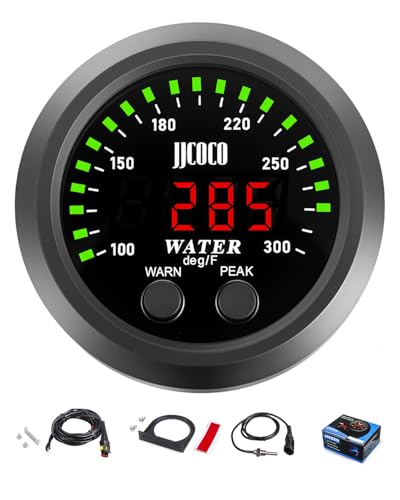
The JJCOCO gauge provides real-time temperature monitoring with dual alerts and peak recall. Best for performance-oriented users who tow, race, or operate in extreme conditions where spotting a spike early matters. The 32°F to 300°F (0°C to 150°C) range covers most automotive and marine cooling systems. A true plug-and-play sensor connects via a pre-sealed OEM connector, helping avoid wiring mistakes.
- Best for: Towing, off-road, and high-load engines where quick spike detection matters.
- Why selected: Combines peak memory with adjustable overheat alarms for proactive cooling management.
- Caution: Ensure the sensor is properly mounted to avoid inaccurate readings or leaks in harsh environments.
UBOG Water Temp Gauge, 2″ 52mm

The UBOG gauge is designed for everyday vehicles and boats, with a straightforward 100-250°F range and a white LED backlight for legibility in any lighting. Its ABS body emphasizes light weight and durability. The measured value is intended to help prevent overheating while driving or operating auxiliary equipment.
- Best for: Daily drivers and boaters needing a clear display at a modest price.
- Why selected: Simple, dependable readings with strong visibility under white light.
- Caution: Fewer advanced alarms means less proactive warning in some setups.
BOSCH SP0F000045 Style Line Mechanical Gauge

This is a traditional mechanical gauge with a white dial and chrome bezel, designed to fit standard 2″ gauge openings. It reads 100-250°F and is well-suited for classic builds or OEM-style dashboards where a mechanical readout is preferred over digital displays.
- Best for: Vehicles needing an OEM look or older builds requiring mechanical gauges.
- Why selected: Chrome bezel and familiar dial layout simplify integration with existing dashboards.
- Caution: Lacks digital alarms or peak recall features found on some electronic models.
ZHSYMX Universal 52mm Digital Gauge

The ZHSYMX gauge offers a digital readout with alarm and a slim profile, designed to fit standard 52mm pods. It supports peak/recall and a user-selectable threshold, making it a strong choice for those installing in compact dashboards or custom automotive pods.
- Best for: Modern dashboards requiring precise digital readouts with alert features.
- Why selected: Programmable warnings and a slim single-board design enable versatile mounting.
- Caution: The need for a proper 12V power and wiring setup means some installation complexity.
GlowShift Tinted 7 Color Temperature Gauge Kit

GlowShift’s kit emphasizes interior customization with seven color modes and dimming options. It uses a 2-1/16″ 52mm gauge and a black dial with a smoked lens. The multi-color display is compatible with many interior lighting schemes, making it ideal for show-quality builds and those who want to match dashboard aesthetics.
- Best for: Car enthusiasts prioritizing visual customization and interior styling.
- Why selected: Color options let users coordinate with factory or aftermarket lighting schemes.
- Caution: Aesthetic features can complicate the interpretation of readings in bright daylight if colors distract from the scale.
Buying Guide: Choosing The Right Water Temperature Gauge
What gauge type should I choose? Options include digital electronic gauges with alarms and peak recall, or traditional mechanical dials. Digital gauges typically offer more features such as programmable alarms, memory of peak temperatures, and brighter displays. Mechanical gauges are often preferred for OEM-style dashboards and simple, reliable operation.
What range do I need? Most automotive cooling systems run well within 100-250°F (38-120°C). If you drive high-performance or diesel applications, consider a wider range that covers potential spikes up to 300°F (150°C).
How important is mounting and wiring ease? Plug-and-play sensors and pre-sealed connectors reduce installation time and reduce the risk of wiring faults. If you’re new to car electronics, choose a kit with guided installation and clear wiring guides.
Which features add real value? Alarm thresholds that trigger at dangerous temperatures, peak recall to monitor spikes, and backlighting for night visibility can help prevent overheating and support tuning decisions. Consider whether you preferwhite or colored backlights to match your interior.
Where should I install the gauge? Place it where readings are easily visible from your driving position, ideally in a gauge pod or dash opening that aligns with standard 2″ or 52mm fittings. Ensure the sensor location accurately reflects coolant temperature without being affected by immediate heat from surrounding components.
FAQ
What is the typical coolant temperature range for most cars?
Most vehicles run coolant temperatures around 180-210°F (82-99°C) under normal operation. Spikes beyond 230°F (110°C) can indicate an overheating issue that should be checked.
Do mechanical gauges provide the same reliability as digital ones?
Mechanical gauges are simple and can be very reliable, but they generally lack programmable alerts and peak memory. Digital gauges typically provide more diagnostic features.
Are backlit gauges easier to read at night?
Yes. Backlit displays improve readability in low light and reduce driver distraction. Choose colors that contrast well with the dial for quick interpretation.
Can I install a water temperature gauge myself?
Many gauges are designed for DIY installation with step-by-step guides and plug-and-play sensors. If the sensor requires cutting or complex wiring, professional installation is recommended.