Best Child Booster Seats for Cars That Grow With Your Kid 2026
Answering the question of how to keep big kids safe and comfortable on every ride, this guide highlights five booster seats that fit children 40-100 pounds and roughly 40-57 inches tall. Each option is best for families needing easy portability, flexible configurations, or growth-ready features. The top picks include lightweight backless designs for travel, sturdy highbacks for added head support, and 3-in-1 models that transition with your child. The table below summarizes who each product is best for and why it stands out.
| Product | Best For | |
|---|---|---|
| Graco TurboBooster 2.0 Backless Denton | Active families needing a lightweight backless booster | Top-rated crash-tested safety features |
| Cosco Topside Backless Leo | Travel-friendly, budget-conscious households | Lightweight, compact, easy to move between vehicles |
| Graco TurboBooster 2.0 Highback Declan | Children needing extra head and back support | 2-in-1 highback to backless with safety engineering |
| Graco Tranzitions 3-in-1 Cinder | Growing children seeking long-term use | Harness to highback to backless transitions |
| Chicco GoFit ClearTex Plus | Parents prioritizing LATCH stability and quick release | Easy installation and one-hand removal |
Graco TurboBooster 2.0 Backless Denton

This backless booster is designed for big kids ages 4-10, supporting 40-100 pounds and up to 57 inches. It is backed by Graco ProtectPlus Engineered, a framework of crash tests covering frontal, rear, and rollover scenarios, along with tests aligned to the New Car Assessment Program. Best for parents who want a lightweight, portable option for travel or second cars. Caution: does not provide head support when used as a backless booster.
Cosco Topside Backless Leo

Leo is a lightweight, compact booster for kids 40-100 pounds and 43.4-57 inches tall. It provides extra height to keep the seatbelt correctly positioned and is easy to move between vehicles, making it a practical travel booster. Best for families seeking a portable option with straightforward belt positioning. Limitation: backless design means less torso support on longer trips.
Graco TurboBooster 2.0 Highback Declan

This model converts from a highback booster to a backless booster, growing with your child from 40-100 pounds and up to 57 inches tall. It features safety-forward design with Graco ProtectPlus Engineered and a height-adjustable armrest and head support for added comfort. Best for families needing a long-lasting booster that adapts to an evolving child. Caution: higher weight minimum for some configurations may require continued use of the highback mode during growth spurts.
Graco TurboBooster 2.0 Backless Trisha

Trisha mirrors the Denton model with similar age and weight ranges (4-10 years, 40-100 pounds, up to 57 inches) and includes Graco ProtectPlus Engineered. It’s best for families who want a familiar, widely available backless option with strong crash testing assurances. Use caution when long trips require additional back support, which backless designs do not provide.
Graco® TurボBooster LX Backless Rio

Rio is a backless booster designed for 40-100 pounds and 43-57 inches, with a front-adjust LATCH system for quick securing to the vehicle seat. Best for quick installs in vehicles that lack built-in LATCH or for families that frequently swap cars. Advantage: simpler setup; Limitation: backless format provides less torso support on longer trips.
Chicco GoFit ClearTex Plus Backless Booster
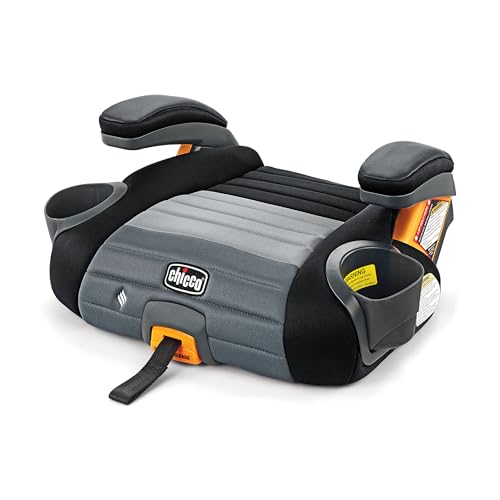
GoFit ClearTex Plus is designed for children 4 years and older, 40-110 pounds, 44-57 inches tall, and features LATCH stabilization plus a quick-release design for one-hand removal. It provides ergonomic support with double foam padding and belt-positioning guides. Best for parents prioritizing grab-and-go usability and reliable belt positioning. Caution: backless design means less upper-torso support on longer rides.
Buying Guide
What should you consider when choosing a booster seat?
- Growth range: Ensure the seat accommodates your child’s current weight/height and continues to fit them as they grow.
- Back support vs. backless: Highbacks add head and torso support, while backless options save weight and space. Choose based on vehicle type and travel needs.
- Installation method: Look for LATCH compatibility and easy belt routing to reduce installation errors.
- Portability: If you switch cars or travel often, a lightweight or compact booster is advantageous.
- Comfort features: Armrests, padding, and ergonomic seating improve long-ride comfort.
How to compare models?
- Safety design: Graco ProtectPlus Engineered is a common safety framework to consider.
- Weight and height ranges: Confirm that your child’s measurements fall within the supported range.
- Adjustability: Height-adjustable headrests, armrests, or LATCH systems can simplify setup as kids grow.
FAQ
- What age is best for a backless booster? Generally, once a child is tall enough for a proper belt fit and can sit still, usually around 4 years or older, a backless booster can be appropriate in some vehicles.
- Can booster seats be used in a vehicle without LATCH? Yes, many boosters can be secured with the seat belt even without LATCH, but LATCH can provide extra stability for younger children.
- How long should a booster seat be used? Booster seats are typically used until the child can fit properly in a seat belt alone, often around 8-12 years, depending on size and local regulations.
- What is the difference between highback and backless boosters? Highback boosters provide head and back support and are useful when the car seat lacks proper head restraints; backless boosters are lighter and easier to move but offer less support.
- Is a 3-in-1 booster seat worth it? A 3-in-1 model can be cost-effective and space-saving by growing with the child from harnessed to booster modes, though it may be heavier.
- Should I prioritize weight ranges or height ranges? Both matter; ensure your child’s weight and height fit within the seat’s recommended ranges for optimal belt positioning.